

Starting Photography, Properly
Why most people quit photography

Most people who quit photography do not quit because they lack talent.
They quit because they never found their footing.
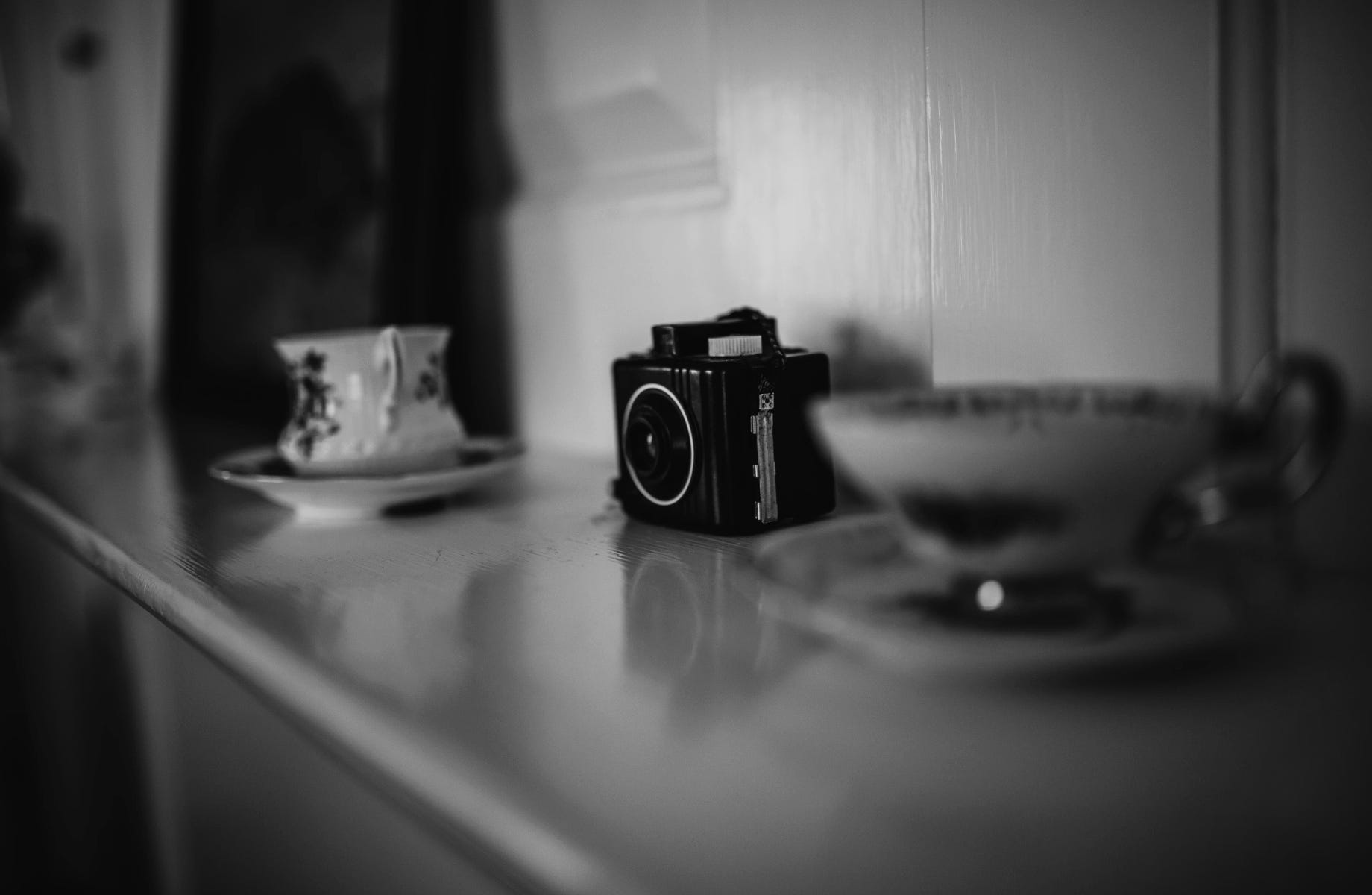
Over the years, I’ve met hundreds of people at the beginning of their photographic journey. Some were young, some much later in life. Some had expensive cameras, others something straightforward. What they had in common was not their level of skill, but their level of confusion.
This series is called Starting Photography, Properly because order matters.
Not speed.
Not gear.
Not ambition.
Order.
This is not a course and not a challenge. It is a slow, ongoing series for people who are starting, restarting, or who feel they never really had a proper beginning. It will sit alongside everything else I write here, business, street photography, black and white, reflections, without replacing any of it.
We start with the most important question.
Lesson 1
Why most people quit photography
People rarely say “I quit photography”.
What they say instead is:
“I don’t have time anymore.”
“I lost motivation.”
“I’m not improving.”
“I thought I’d be better by now.”
Underneath all of these is the same issue.
They don’t know what they are working towards.
At the beginning, photography looks simple. You take a camera, you point it, you press a button. Very quickly, though, it becomes noisy. Settings, lenses, genres, social media, comparisons, opinions, rules. Too much information arrives before any real experience has had time to settle.
Confusion kills motivation far more efficiently than failure.
Most beginners are taught how to change settings before they understand why they are taking a photograph in the first place. They learn the names of things before they learn how to look. They collect advice instead of experiences.
This creates a dangerous gap.
On one side, expectations.
On the other, reality.
When those two drift too far apart, people stop.
Another reason people quit is comparison. Photography today is surrounded by finished work, polished feeds, carefully curated portfolios. Beginners compare their first uncertain steps with someone else’s tenth year. That comparison is unfair and, more importantly, useless.
Photography is not linear. Progress does not look like constant improvement. It looks like long plateaus, sudden jumps, and periods of doubt. If you expect visible improvement every week, you will be disappointed very quickly.
There is also the myth of the breakthrough moment. The idea that one day everything will click, style will appear, confidence will arrive. In reality, photography improves through accumulation. Small decisions repeated over time. Showing up without guarantees.
People who last are not more talented. They are simply more patient with the process.
A quieter way to begin
If you are at the beginning, or feel you are still there, this is what matters most right now:
Slow down the input.
Reduce the noise.
Stop trying to learn everything at once.
Photography does not start with mastering aperture, shutter speed, or ISO. Those will come, and we will cover them, properly, in context. Photography starts with attention. With noticing light, distance, timing, and how a scene makes you feel before you ever touch a setting.
The goal at the beginning is not to make great photographs.
The goal is to build a relationship with seeing.
If you do that, technique has somewhere to land. If you don’t, technique becomes just another reason to stop.
One simple exercise
For the next few days, don’t change anything on your camera.
Use one focal length.
One mode.
One way of working.
Instead of asking “what settings should I use?”, ask:
Where is the light coming from?
What made me stop here?
What happens if I wait ten seconds longer?
No results required. No sharing required.
Just attention.
This series will move slowly. Some posts will be practical, some theoretical. Aperture, shutter speed, ISO, depth of field, all of that will come, but always connected to real photographic problems, not diagrams.
There is no rush.
Starting properly means allowing photography to take the time it actually needs.
In the following piece, we’ll look at learning to see before learning settings.
I’ve written in more detail elsewhere about lenses and technical choices, but none of that matters until the foundations are in place.
Here one of them: Why I Still Shoot Prime in a Zoom World, also my full Substack Archive is here.
Your point about the impact of social media feeds is spot on. I think back to my formative photography years, 1970s through the 1990s, when photography was still analog. My skills and vision developed at my own pace and according to what inspired me in the field. There were no comparisons, no “likes”; only the thrill when I picked my prints up from the developer. And yes, sometimes disappointment, but I viewed this as a private learning opportunity rather than public embarrassment/shame.
i think you just made the case for instant film cameras